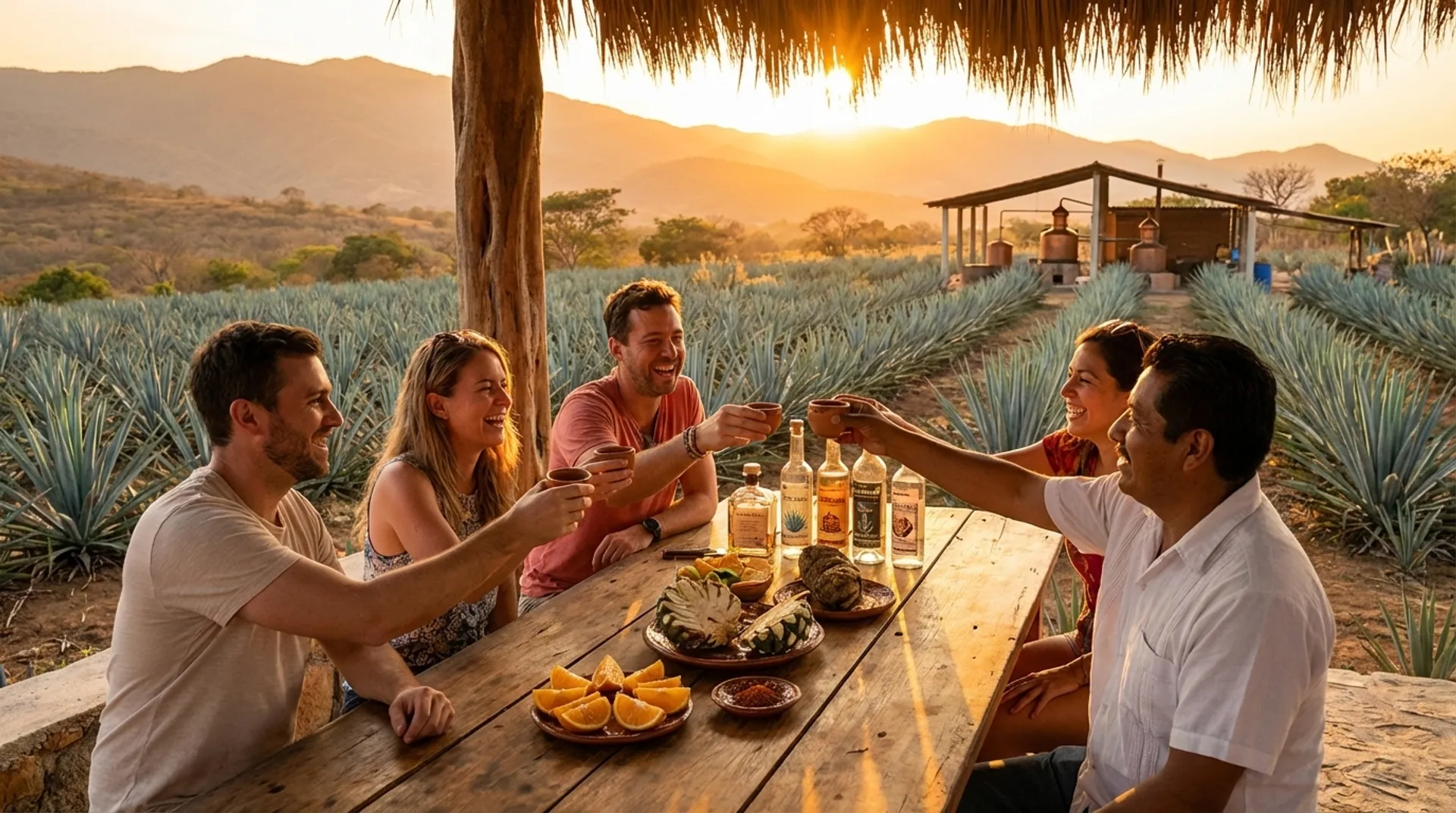
Welcome to the definitive knowledge hub for Agave Spirits in Oaxaca. Whether you are looking to understand the complex terroir of wild agaves like Tepeztate and Tobalá, plan a safe trip to visit traditional palenques in Santiago Matatlán, or just find the best mezcalería in Oaxaca Centro, we have curated a comprehensive guide for you.
Part 1 Mezcal Education

Mezcal 101: The Beginner's Guide
Understand the role of the Maestro Mezcalero, the difference between Artisanal and Ancestral categories, and how to identify high-quality traditional spirits.
Read the Guide →Agave Types & Best Brands
From the common Espadín to the rare Madre Cuixe. Learn to read the label and find sustainable brands.
How It's Made
A visual journey through the ancestral process: Earthen Horno roasting, Tahona crushing, and Wild Fermentation.
Mezcal vs. Tequila
Understand the Denomination of Origin. Why "Blue Weber" agave and industrial steaming creates a completely different spirit.
Part 2 Planning Your Trip
Trip Planner 2025
Best times to visit (Dry Season vs. Festivals), accommodation in Centro, and budget breakdowns.
Safety Guide
Honest advice on walking at night in Jalatlaco and Xochimilco, plus water and food hygiene tips.
Ruta del Mezcal Map
Navigating the "World Capital of Mezcal" in Santiago Matatlán and the clay-pot traditions of Santa Catarina Minas.
Best Mezcalerías
Where to find educational tastings: In Situ, Mezcaloteca, and other top archives.
Feria del Mezcal
The massive July festival at the Convention Center: Tickets, brands, and events.
Key Facts: What Defines Traditional Mezcal?
Mezcal is not just a drink; it is a cultural artifact of Oaxaca. To be considered authentic traditional mezcal, it generally follows these production standards:
- Agave Hearts (Piñas): Roasted in underground earthen pits (hornos) lined with river stones and wood fire, creating the signature smokiness.
- Natural Fermentation: Occurs in open-air wooden vats (tinas) using only wild airborne yeasts—no chemical accelerators are added.
- Distillation: Crafted in small batches using copper stills (alambiques) or ancestral clay pots (olla de barro).
- Terroir: The flavor is heavily influenced by the microclimate, water source, and the specific hand of the Maestro Mezcalero.
While Tequila is a type of mezcal, it is industrial and limited to one agave (Blue Weber). Oaxacan Mezcal can be made from over 30 varieties of Agave, offering the widest flavor spectrum of any spirit on earth.

AboutDiego Garcia
Senior Mezcal Reviewer & Industry Expert
Mezcal specialist with 15 years of experience in the Oaxacan spirits industry. Dedicated to preserving traditional production methods.
Read full profile & articles